
When Should You Check Your Blood Glucose at Home?
home blood glucose monitoring cuddalore
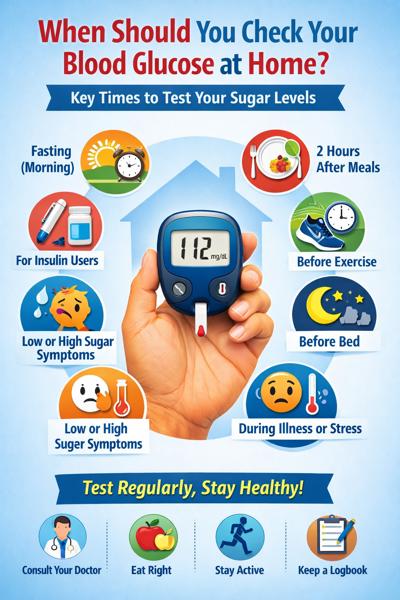
**When Should You Check Your Blood Glucose at Home?
A Practical Guide for Every Person with Diabetes**
Home blood glucose monitoring is one of the most powerful tools for managing diabetes. It helps you understand how food, activity, medicines, stress, and illness affect your sugar levels. But many people are unsure about when exactly they should test.
This simple guide explains the right times to check your blood glucose, based on your daily routine and medical needs.
🩺 Why Home Monitoring Matters
- Helps prevent high and low sugar episodes
- Guides your doctor to adjust medicines
- Shows how your body responds to meals
- Motivates lifestyle changes
- Reduces long‑term complications
📌 1. Fasting Blood Glucose (Early Morning)
When: Immediately after waking up, before eating or drinking anything. Why: Shows your baseline sugar level and overnight control. Ideal Range: Usually 80–130 mg/dL (varies by individual).
🍽️ 2. Before Meals (Pre‑Meal Testing)
When: 10–15 minutes before breakfast, lunch, or dinner. Why: Helps adjust medication doses and prevents pre‑meal highs. Useful for: People on insulin or multiple oral medications.
🍛 3. 2 Hours After Meals (Post‑Meal Testing)
When: Exactly 2 hours after starting your meal. Why: Shows how your body handles food and carbohydrate load. Ideal Range: Usually <180 mg/dL (individual targets may differ). Most important meal to test: After lunch or dinner, as spikes are common.
🏃 4. Before Exercise
When: 20–30 minutes before physical activity. Why: Ensures sugar is not too low before starting. Important for: People on insulin or those prone to hypoglycemia.
💧 5. During Symptoms of Low or High Sugar
Check immediately if you feel:
- Shaking, sweating, hunger, dizziness (possible low sugar)
- Excessive thirst, tiredness, blurred vision (possible high sugar)
This helps you take quick corrective action.
🌙 6. Before Bed
When: At night, before sleeping. Why: Prevents nighttime hypoglycemia and helps adjust evening medicines. Ideal Range: Usually 100–140 mg/dL.
😷 7. During Illness or Stress
Fever, infections, pain, or emotional stress can raise sugar levels. Testing 2–3 times a day during illness helps prevent dangerous spikes.
💉 8. For People on Insulin
You may need more frequent testing, such as:
- Before each insulin dose
- 2 hours after meals
- Occasionally at 3 AM (if doctor suspects nighttime lows)
Your doctor will guide you based on your insulin type.
📊 How Many Times Should You Test?
It depends on your treatment plan:
- Diet-controlled diabetes: 1–2 times a week
- Oral medications: 1–2 times a day
- Insulin users: 3–6 times a day
- Uncontrolled diabetes: More frequent testing until stable
📝 Record Your Readings
Maintain a simple logbook or use a mobile app. Note:
- Time
- Meal
- Activity
- Symptoms
- Medication changes
This helps your doctor make accurate decisions.
🌟 Takeaway
Home blood glucose testing is not just a number—it is a window into your health. Testing at the right times helps you stay safe, adjust your lifestyle, and prevent complications.
For personalised diabetes care, visit Kalyaan Speciality Hospital, Cuddalore.
Dr K Kalyanaraman MD DM PGD HSc(diabetology)
dr k kalyanaraman MD DM PGDHSc(diabetology)
Healthcare insights from Kalyaan Speciaalty Hospital
Enjoy Latrexa health information?
Add Latrexa as a Preferred Source on Google so useful articles and patient guides can show up more often in your Search results.
Add Latrexa as a Preferred Source on GoogleRelated Articles

Dengue Fever: Know the Signs, Prevent the Bite, Protect Your Family
Dengue fever is a mosquito-borne viral infection that can sometimes become serio...

Pulses and Protein in Diabetes Mellitus
Pulses for diabetes Protein-rich foods for diabetics Low glycemic index foods Hi...
What To Do in Case of an Acute Heart Attack: A Life Saving Guide for Everyone
Interventional Cardiology | Advanced Life Support/Heart Attack/Angioplasty